Quick Reference Guides and Student FAQs
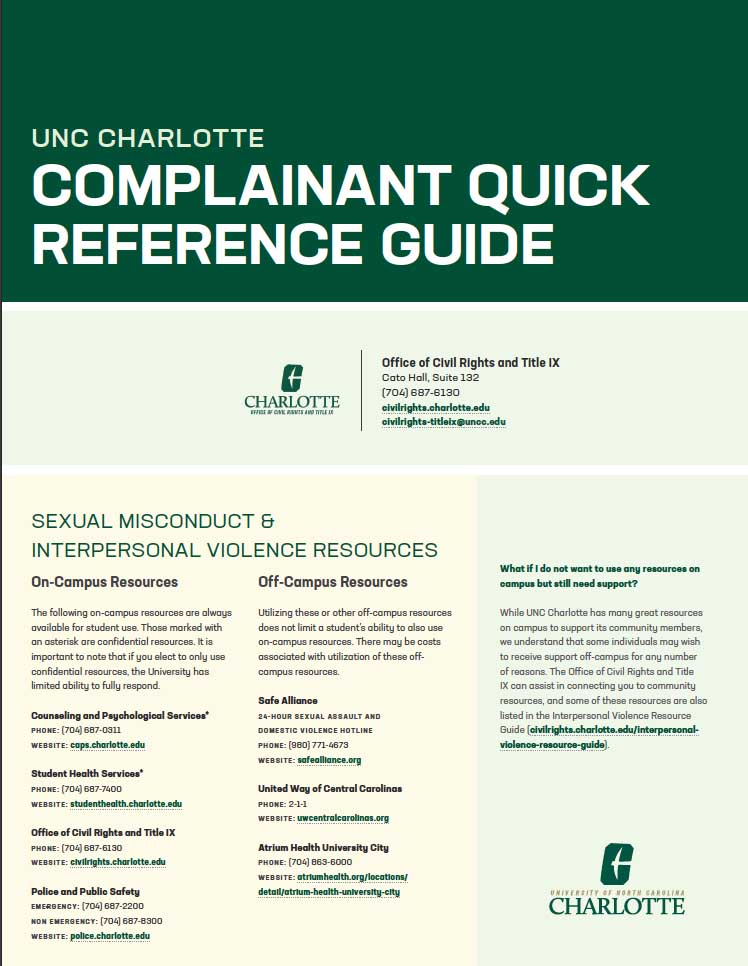
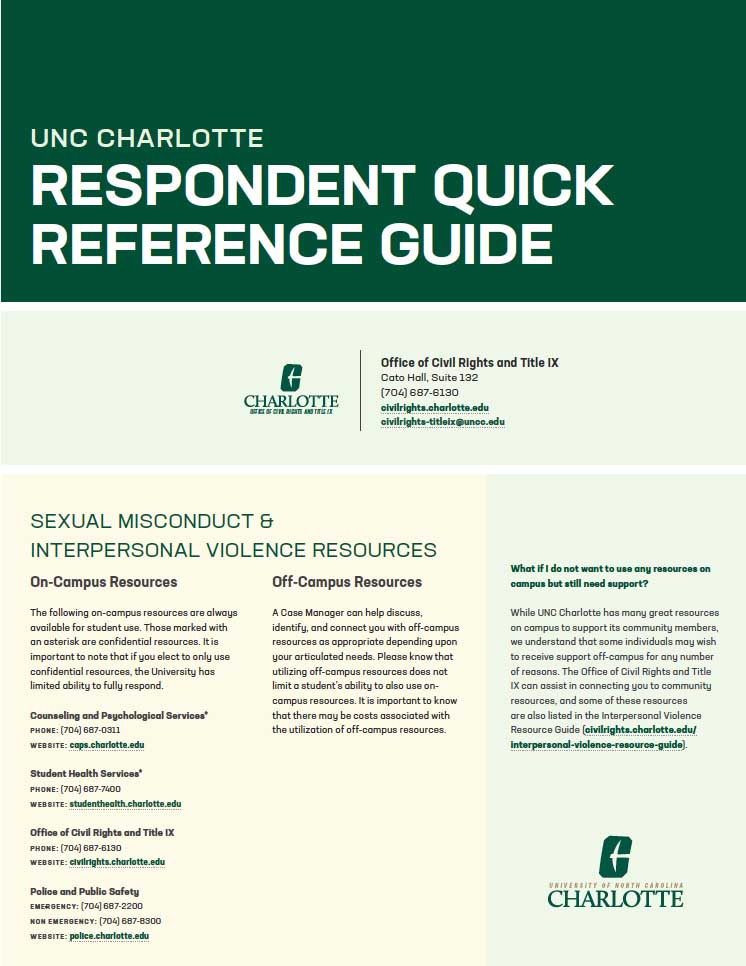
Quick Reference Guides
Frequently Asked Questions
As a witness, will the Complainant and/or the Respondent know what information I provide or my name?
In Title IX investigations, Complainants and Respondents have a right to know what information is provided to the assigned Investigator and who provided it; it’s one of their rights under federal law.
Can I bring someone with me to the investigation interview?
Involved parties, including witnesses, may be accompanied in any meetings or interviews by a support person. You will just need to provide a signed FERPA form. Complainants and Respondents also have the right to an advisor of their choice throughout the process. The terms for these additional individuals and the extent to which they can participate in the proceedings may vary depending on the applicable University policy.
Do I have to make a statement or answer questions if called in as part of an Office of Civil Rights and Title IX investigation?
No, it is your right not to provide information to the Office of Civil Rights and Title IX Investigator.
How long does an investigation take?
The University strives to resolve cases within 60 business days, excluding any appeals. In the University’s experience, however, circumstances including but not limited to, parallel criminal investigations, multiple witnesses, and difficulties with availability and scheduling of parties and witnesses, often exists; therefore, many cases may take longer to be resolved.
If the cases take longer than 120 business days to resolve, the Office of Civil Rights and Title IX will provide a written explanation to all parties as to the reason(s) for the delay.
What happens after a report is made to the Office of Civil Rights and Title IX
When reports are submitted to the Office of Civil Rights and Title IX (incidentreport.charlotte.edu), the information is reviewed to assess for any necessary interim measures and outreach is initiated by the assigned case manager. Students are asked to schedule a meeting with the case manager so that accommodations, resources, or other support options can be discussed and arranged. The case manager is able to assist with academic accommodations (excused absences, extended test time, incompletes, etc.) as well as aid in things like changing University housing assignments, implementing accommodations in University employment, and coordinating referrals to offices such as CAPS, Disability Services, and Police and Public Safety. Additionally, the case manager will also discuss safety planning, resolution options, and provide the University’s Interpersonal Violence Resource Guide (as appropriate), which further discusses both campus and community resources, accommodations, and resolution options.
What happens if I talk to a non-confidential resource?
If a student talks to a non-confidential resource (e.g., faculty, staff, resident advisors, academic advisors), yet wishes to have the incident remain private, the student can request privacy from the Office of Civil Rights and Title IX. In many cases, the Office of Civil Rights and Title IX is able to honor that request for privacy while still meeting its obligation to provide a safe environment for the entire campus community.
What types of support or accommodations are available to me if I choose to work with the Office of Civil Rights and Title IX?
The Office of Civil Rights and Title IX case manager works directly with students to help inform them of various available support options, resources, and accommodations based on each student’s specific, individual needs. These options may include:
- Housing accommodations
- University employment accommodations
- Academic accommodations (e.g., extended deadlines, extended test times, excused absence, incompletes)
- No Contact Orders
- Referrals to CAPS; Disability Services, Student Assistance and Support Services
Who can I talk to on campus that’s confidential?
If a student wants to discuss an experience of sexual assault, dating violence, domestic violence, or stalking with someone on campus who does not have a responsibility to report the incident to the Office of Civil Rights and Title IX, they may access any of the following services:
Counseling and Psychological Services: 704.687.0311; caps.charlotte.edu
Health Center: 704-687-7400; studenthealth.charlotte.edu
Department of Athletics Psychologist: caps.charlotte.edu
University Ombuds: ombuds.charlotte.edu
Will I have to meet with several people?
The Civil Rights and Title IX Investigator attempts to receive all the necessary information within one meeting, however, additional meetings may need to occur if there is new evidence to speak to or clarifying questions that need to be posed by the assigned investigator.
Will I have to meet with the other party?
No, you are not expected to meet with the other party during an investigation or other resolution process. If there is a hearing, you can request to utilize technology that permits the other party to see and hear you even if you are not in the same room.